
Firmus
Last Friday was a bad day for Australia. Sure, Firmus was a bit overpriced, sure there was lots of optimistic hopium in the prospectus. 2/8 data centres operational and a massive amount of CAPEX, borrowed money and risk between listing and the EBIT estimates. Still, I don’t think that’s why it failed. You could tell from the grave dancing in the weekend press. It failed because in Australia, we are not that fond of enormous success. The tall poppy syndrome ended it. You could almost feel it being willed toward failure by anyone not in the earlier rounds. For weeks leading up to it there were leaked stories in the press about all sorts of nonsense, ‘unpaid invoices’ and whatever else. There was a lot not to like about the prospectus, but all of it was fixable.
I find the whole thing to be a uniquely Australian story. A case in point, Senator Sharma.
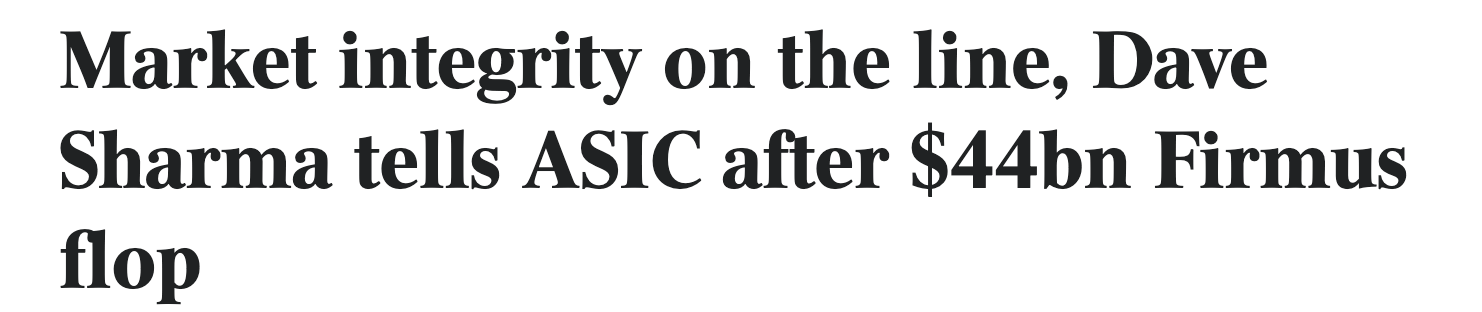
Right. Except, within a few days he had written to ASIC with very detailed questions about the process. How? How does he know all this stuff and have the letter drafted, sent and in the press so quickly? He’s worried about the “book-building process”. Is he? He’s never worked in finance, never raised a dollar. I’m super impressed that he is worried about it or even knows what it is. Is it possible he’s getting a steer from some market participants who are enjoying watching this fall in bits?
The biggest loser here is not Firmus. My guess is they simply wave goodbye to the ASX and take their business elsewhere, because the world will be needing a lot of data centres and it certainly needs the people that can build them. I’d suggest they started this week more motivated than ever before.
Why a disaster?
- Australia is perfect for data centres. Lots of land, lots of solar, lots of other potential power sources that we don’t use. The biggest possibility of the last decade has just been scared off.
- Having Firmus here would have allowed some critical knowledge to compound within Australia. Now it won’t and nobody will care because we’ll never know what we didn’t have.
- The ASX. Just catastrophic for them, a second-tier exchange is quickly becoming a third tier exchange. They simply cannot find a win.
- For founders. Not just that the population doesn’t want you to succeed, the government will tax you at 50% if you do. Who will start a business now in Australia? Who will look forward to the glorious day on the exchange when you ring the bell and go public?
This was the icing on the cake really. One of the biggest economic opportunities of the last 100 years, that we really need to be getting involved with and we’re back onto slagging people off for having a private jet. Did it to Mike Cannon-Brookes. Did it to Ed Craven. Continue to do it to Gina Rinehart. By the way, did you know Oliver doesn’t button up his shirt properly? His wife is attractive and successful in her own right too? A terrible thing.
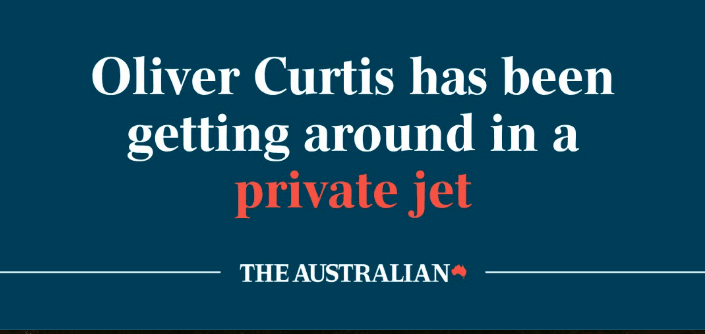
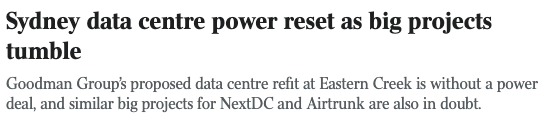
The losers? That’d be the rest of us on holiday camp island. The next story in the paper after the Firmus debacle was…we have a bit of a problem building data centres. If only we had some entrepreneurs that could help us out…maybe take some risk…push the envelope…why don’t we have any of those guys?
The real message here is that if you make it in Australia, or look like you might, you better look out. Where is James Packer? Where are the Murdochs? Where is Ivan Glasenberg? Anthony Pratt? Frank Lowy? Even Fred Schebesta has left.
Solutions not problems
A catchphrase I learned years ago when I worked for someone who did not want meetings about problems. So it is with quantum computing and bitcoin, I hear from all sorts of people who can describe to me the problem, not so many the solution.
Satoshi Nakamoto wrote about it in 2010, proposing the solution. “If we see a weakness in SHA256, we can transition to a new hash function”. He was talking about the hash function, but the same logic applies to signatures, which are where the real quantum threat lies: see it coming, upgrade before it arrives.

It is as simple as that. However, in the case of quantum signatures, they are very large so if we all start signing our bitcoin transactions with quantum-proof signatures the blockchain will explode in size and transaction count will collapse.
Enter Imperial College London with a solution to this problem.

In essence what they show is that the storage requirement on the blockchain for a quantum signature can actually be very small. Much smaller than current signatures, so quantum-proofing a blockchain need not be at the expense of scale and might enhance it significantly. It does solve the major issue, which was always the size of the quantum signature. It introduces new trade-offs too, like the burden on wallets running Bitcoin is much higher so signing a transaction before broadcasting it would take longer, acceptable in my view. Not so long ago we waited three days for a bank transfer, I’m sure I can wait a few seconds for a quantum signature.
I would make another point here too that while AI is going to cause all sorts of problems (as we have seen with various hacks) it will accelerate the delivery of new solutions.
Maths (again)
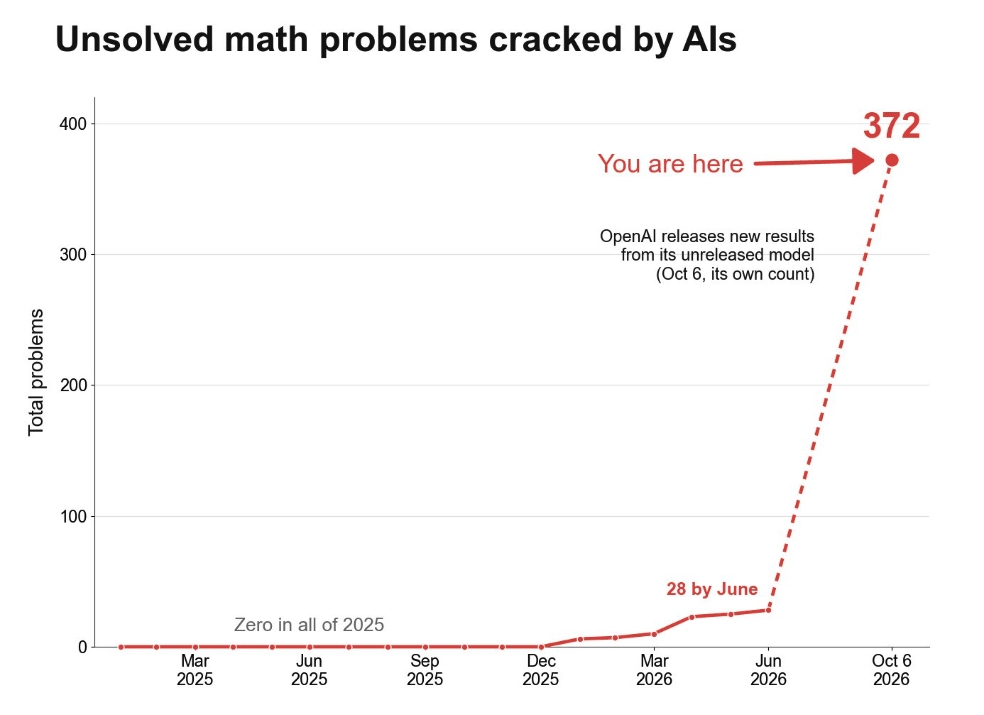
So the unreleased model from OpenAI claims to have solved 372 problems in mathematics. The sheer scale of the release was unbelievable.
The mathematics community is in total disarray, remarkably claiming “we did not ask for this work to be done”.
Do they own mathematics? Does anyone need a licence to solve problems?
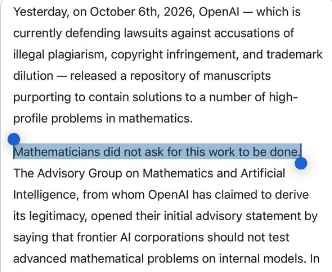
We really are at the top of the intellectual food chain with these people. I have no doubt their capacity is way beyond that of the rest of us. So, it really is hard for them to discover that it doesn’t matter anymore. Rather like a Greek God being cast out amongst the ordinary mortals. Those ordinary mortals, armed with a prompt and an LLM can now solve these problems (and they are doing). Keep in mind some of the problems solved by OpenAI are 200 years old and they were solved by the model in hours.
There are lots of special groups of clever, intellectual cartels that pretend not to be. Lawyers and doctors spring to mind. Lawyers will fall first because the LLMs are outstanding with the law and with drafting. With the release of Gemini 4 this week, look at the gains on the Harvey Legal Bench score. Claude Opus 5.5 is (I think) the best model in the world right now, Gemini 4 (which I haven’t used yet because it’s only a few days old) scored 5x as highly at legal work. The benchmark is described here, perhaps interesting for lawyers only but it is designed to mirror the real, complex work of a law firm.
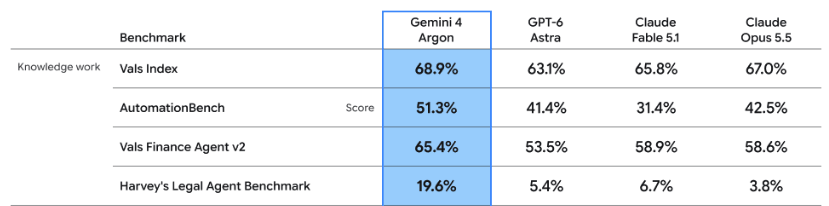
Will lawyers complain? I think not, it’s hard to find one that actually enjoys it so I think it will be a welcome relief amongst those people who have spent a lifetime going blind reading 600-page documents. Doctors will fight to the end, “my status is my life”.
At the other end of the scale. Call centres again. For the first time in a very long time employment growth at call centres has gone negative. Yet, I hear nothing. The Association of Call Centre Persons is not saying “we did not ask for this”. People are perhaps relieved that the very hard work of understanding the customer’s complaint, checking the policy and doing your best to not really annoy them is now automated.
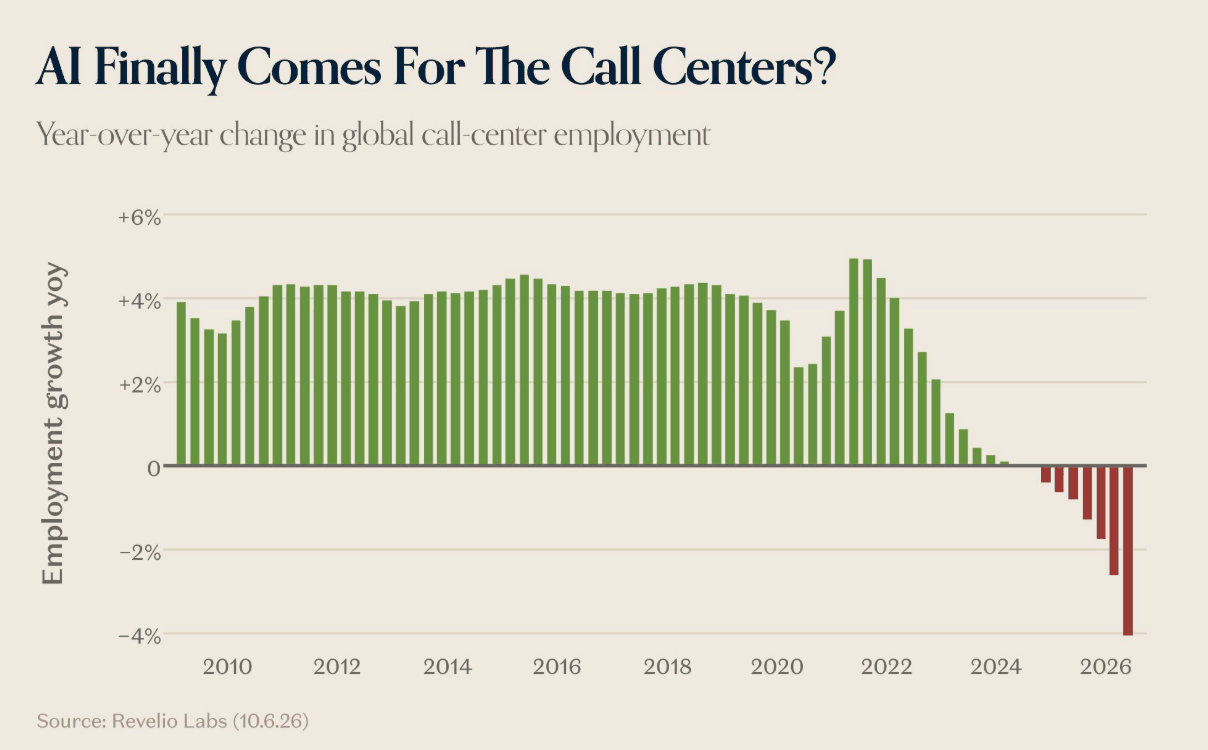
Bottom line. Very clever people are going to find this very, very hard to deal with. Everyone else will breathe a sigh of relief. The long days of call centre drudgery, which are modern day coal mines, are ending.
But what should we do, the rest of us? I think we should cheer on the new intelligence, get behind it because we have absolutely no idea the problems it might solve, the cures it might discover. Economic growth is problem solving.
Intelligence absorbs ecosystems
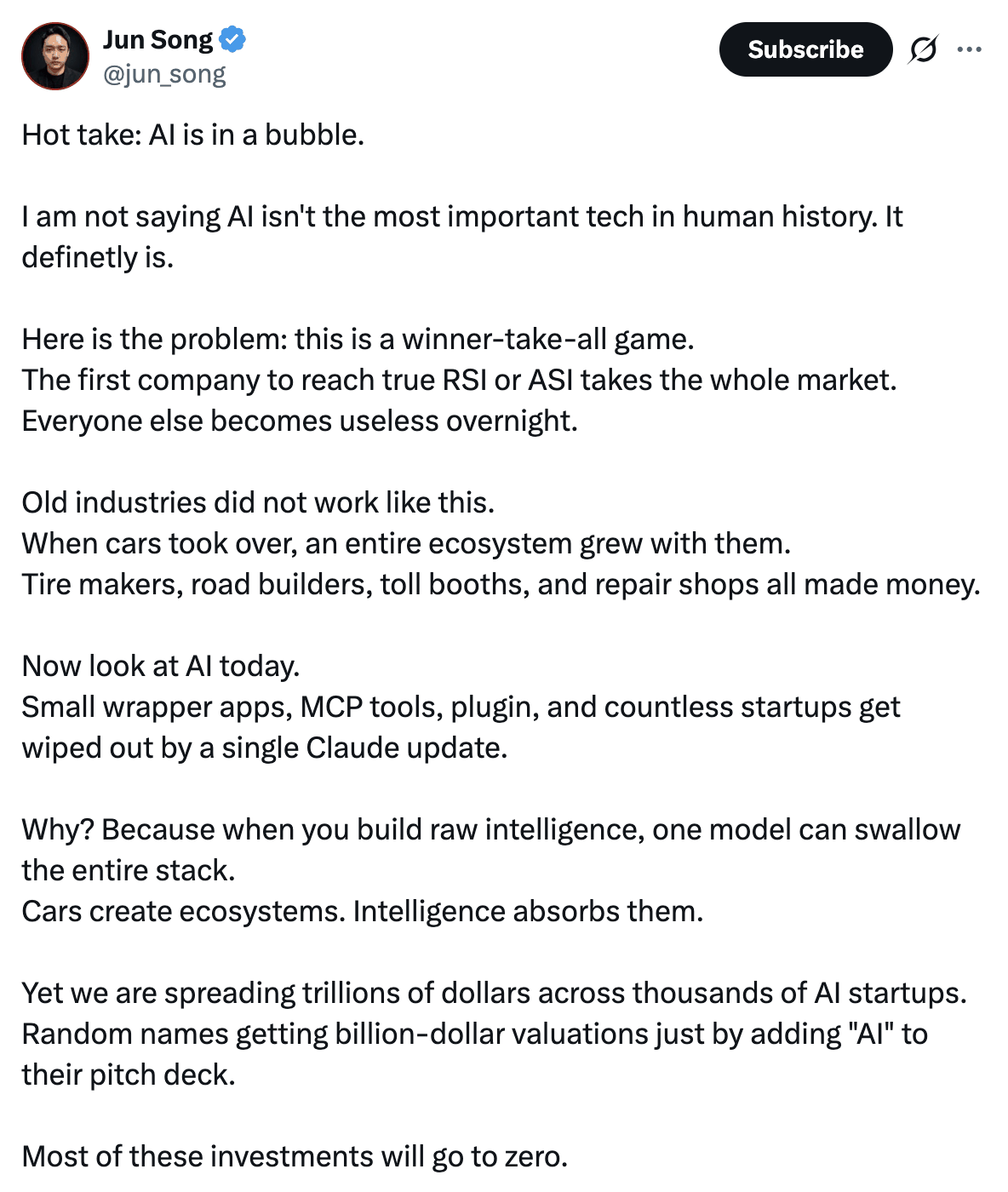
I like this theory but it ignores a few things. Mostly that we cannot imagine the ecosystems that will be spawned by AI. We have all been totally wrong so far about how quickly this would go. Jun is right, most of the stuff we all glued together with AI 6 months ago is now redundant and trivial for the model to do in 30 seconds. Intelligence does absorb ecosystems, but mostly just ones that were not very good.
I think we (us….me) currently lack ambition because we can’t compute how fast it is going. Could you, Bob from Parramatta, cure cancer in two years with a good AI harness and a bit of help? Yes. But like me, you are getting the machine to filter spam emails about discounts at Bunnings Warehouse.
The next five years could be very, very special. We probably all just need to lift a bit harder and have some ambition for the new intelligence. You won’t even have to do the work, you don’t even need to type the ideas, you can just speak them to the machine.
All you have to do is imagine it, that’s your job now.
Euro-Trash

That was 2020 though. The ECB had already lost all its credibility by then anyway and Lagarde was doing her best to get some back. “Other actors to deal with these issues”. By which she meant the bond market.
At the time the market was concerned about Italian spreads as they were the epicenter of the Covid pandemic at the time. Her remarks were a disaster. The Italian 10-year yield spread over German Bunds jumped by more than 60 basis points in a single day (its largest single-day widening on record), Italian government bonds cratered, and Milan’s stock index plunged nearly 17%.
Within hours she had done a 180 and was across all news channels saying the ECB was “fully committed to avoiding any fragmentation in a difficult moment for the euro area”.
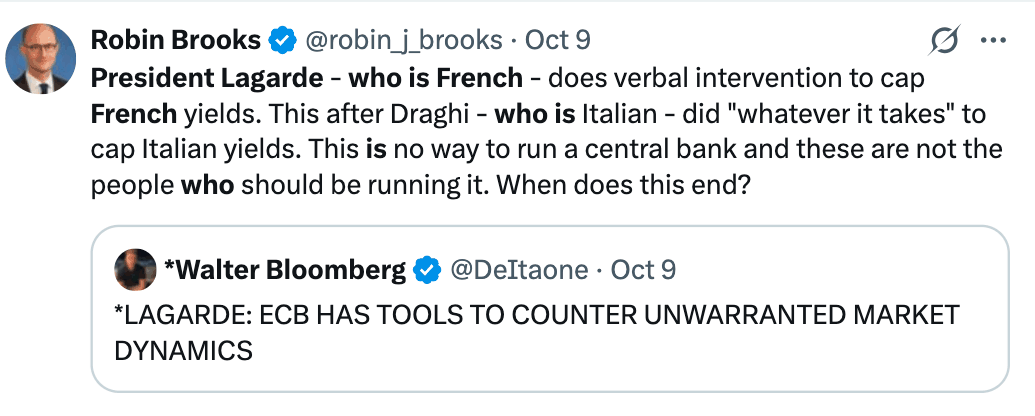
The interesting thing this time is France is in the firing line. French yields were not helped by government borrowing and the continued political unrest across the country. Mr Brooks is very upset, because the Italian guy saved Italy and it is near certain Lagarde will do the same for France and then promptly resign.
The end-game for Christine Lagarde is very close. It will be a sad day for MoneyBits when she does step down and I confidently predict she will not do so until there has been some intervention/resolution on the French debt issue.
Ultimately, the bond market will decide the timing. When it does there will be a massive intervention by the ECB. Buying French bonds without limit. The ideal scenario would be some unrelated crisis, perhaps Ukraine or something related to it but for certain a war somewhere will be blamed for why Lagarde must save Europe. She will be lauded for it. International prizes will follow and she will retire a hero.
