
Quite the moment in time
There have been few weeks as consequential in Bitcoin history as the last one. Perhaps the top five are the launch itself (2009), the Mount Gox hack (2014), the Fork Wars (2017), FTX (2022) and now the double dose of drama, ColdCard and BIP110.
ColdCard we covered last week. It precipitated a round of hacking with AI tools on almost every aspect of infrastructure across the sector, including the famed BTCPay Server.
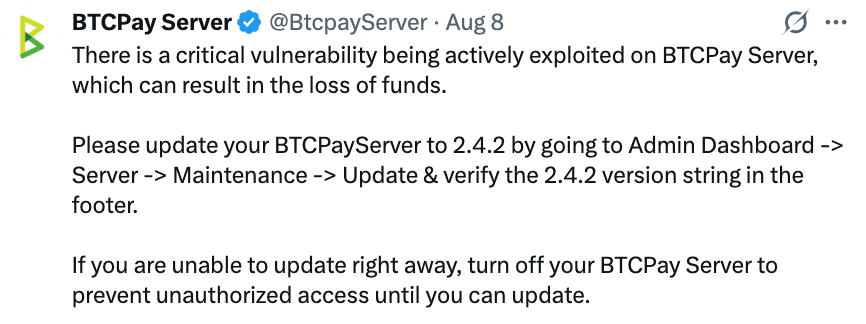
This level of attack will come for everyone. The reason Bitcoin infrastructure is first in line is because the code is open source, so the AI tools can dig and find weaknesses. In banking, all the code is closed source which makes the process slower but much more vulnerable, because it is not actually battle tested in the public arena. This reality will likely play out for closed source code very brutally over the next few years.
On Saturday morning we had the BIP110 soft fork. A group of bitcoiners wrote a modified version of the software that would deny certain transaction types in blocks. Had the network supported that change, then it would have been adopted. I confess to being glued to my laptop for the 30 minutes of the fork, you think you’re sure what’s going to happen but always best to check. It never really had support other than a vocal minority.
Here’s what happened.
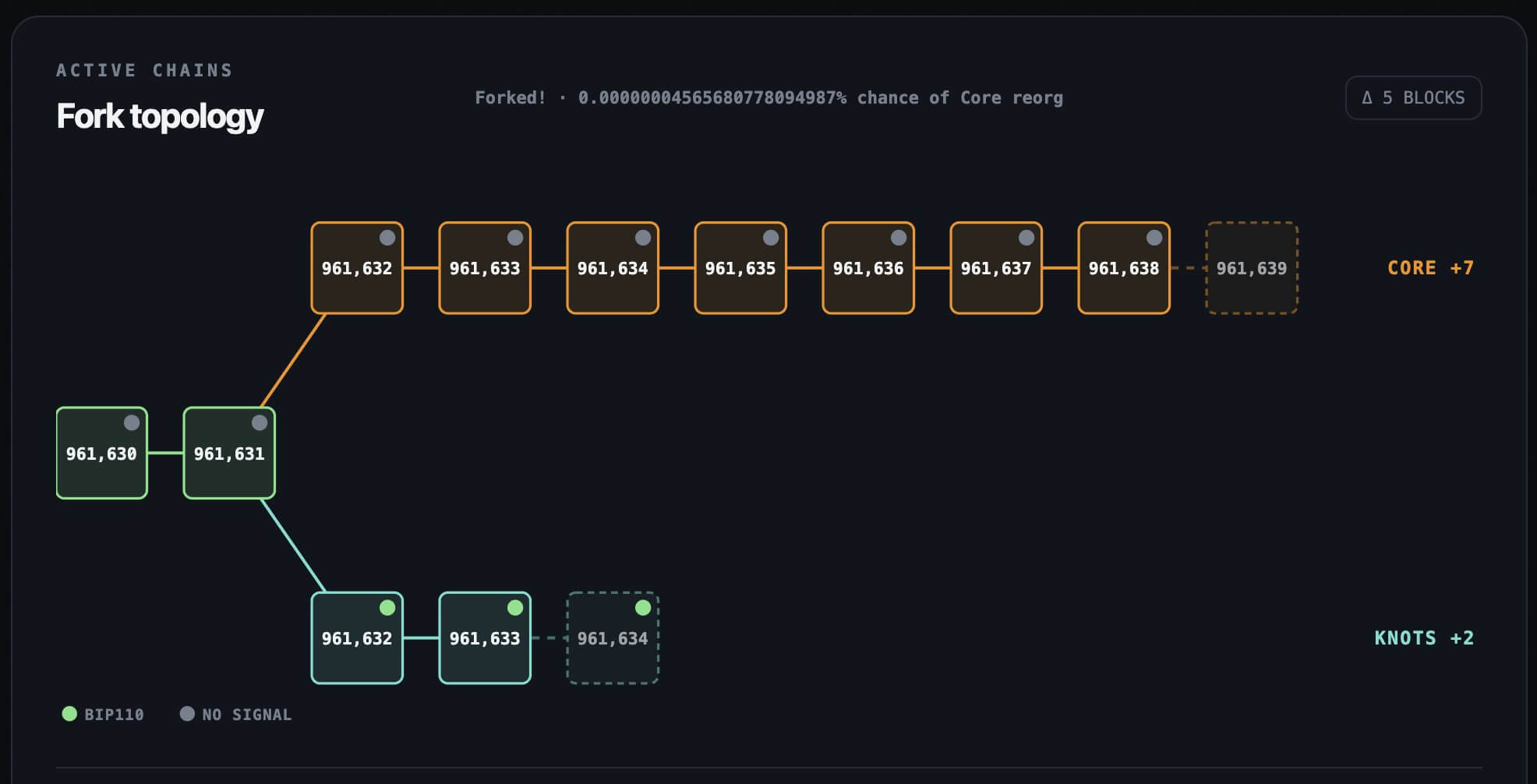
At Block 961,632 the new software rejected blocks that did not signal their acceptance of the BIP110 change. The main chain accepted them. Then everyone waits for the next block to see where consensus flows, as you can see it simply remains with the existing software (blocks at the top).
The BIP110 fork is still stuck on 961,633 because the hashrate remained on the main chain, save for a few BIP110 supporters who mined its first block. The cost of mining that block would have been $200,000, for no reward. Maybe you then mine another but after 1 hour you have burned through $1m (at least) for nothing. At the current rate of hash, the BIP110 fork will take many years to mine another block.
The lessons are, bitcoin can survive a highly vocal minority. Lesson two, even if your arguments are valid (and some of the BIP110 arguments absolutely are valid), you still need consensus. You need to convince people that the quality of your change is so high that it is worth changing the software, it clearly failed on that hurdle. It further failed on the social level too. The mechanism through which the proposed change was prosecuted was aggressive, unnecessary, badly argued and badly executed. Basically non-consensual, and therefore, it failed.
It’s electric and frankly quite violent out there in the software arena. Multi-pronged attack from all angles. Bitcoin, [x%} on the week.
To Do
I guess most of us have never had responsibility for state level financial policy. What actually happens when a country buys or sells a load of foreign currency? We got a glimpse of the deep technicality of these trades when Trump’s Treasury Secretary Scott Bessent left his to-do list on the cabinet table. “Buy Japanese Yen $5-$10 billion.”
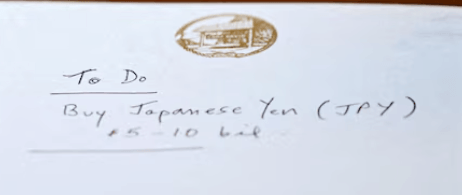
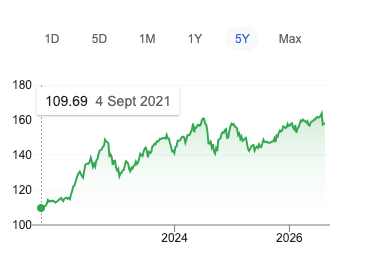
It must be said that most people think that was deliberate and we can never prove otherwise. Let’s tell the market what we are going to do so they will do it as well. It worked 162 > 158. Longer term though 110 > 160. It’s King Canute stuff holding back this tide.
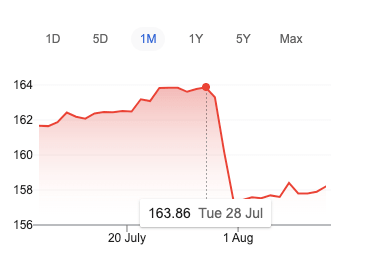
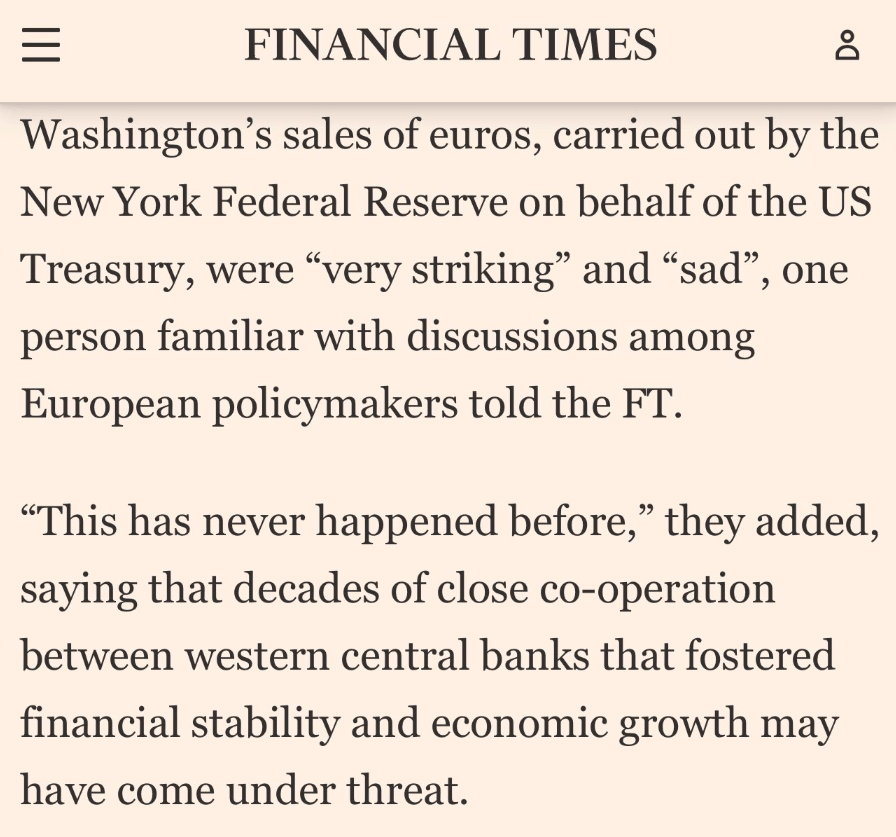
As to the actual execution, Bessent went back to his desk and in a few clicks had dumped a load of euros and bought a load of yen. No post-it note for our partners in Europe. Not much of a surprise but I think they were disappointed. There are lots of ‘persons familiar’ with Euro goings-on at the Financial Times too, so the report is as good as having it from the horse’s mouth. Suffice to say, they were not happy at all. I can’t help but think that every time an American business is fined by the EU, the euro-dumping will continue.
HSBC

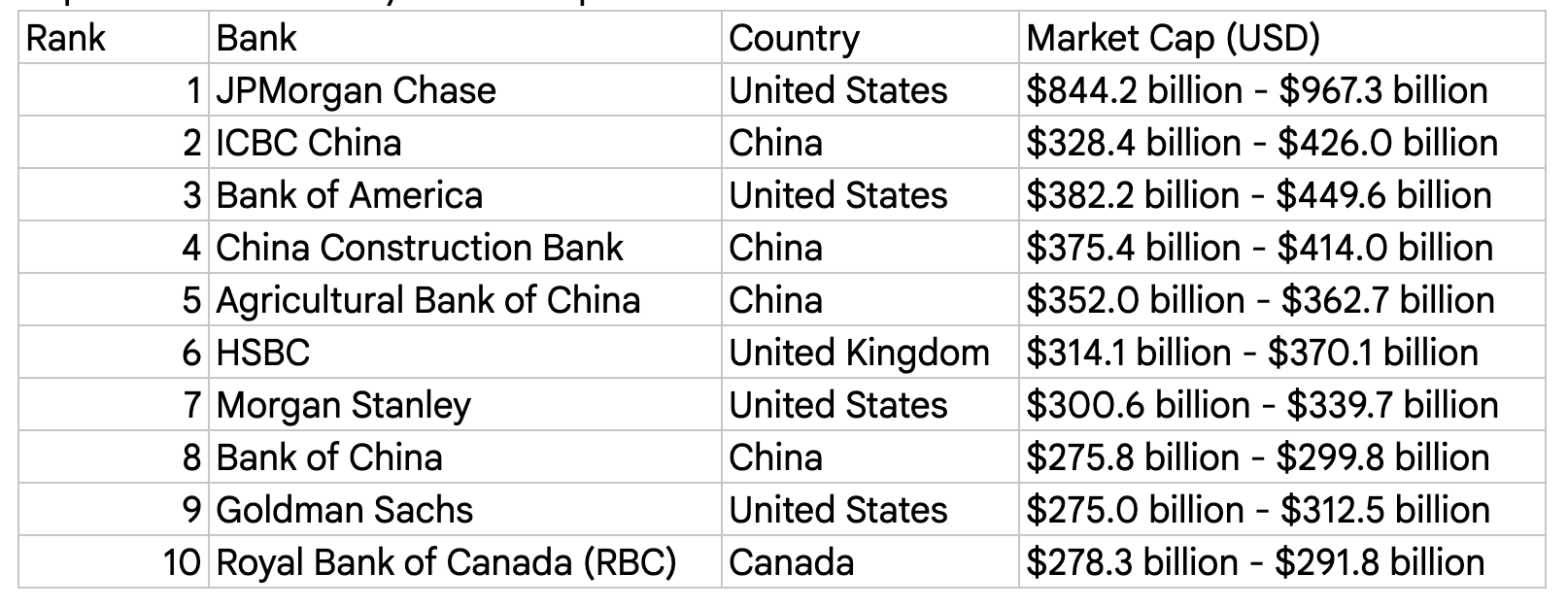
I was surprised to learn HSBC only has 120,000 customers in Australia. They emailed me at the end of July to say they are closing their Australian retail business and I should take my account elsewhere.
Not that it matters particularly, but HSBC has had a long presence in Australia. Foreign banks couldn’t actually do business here until 1985, when the industry was opened up to ‘foreign competition’ under Keating. At the time Australians were assured that the competitive impact of the foreign banks would massively benefit them. Fast forward to today and none of the world’s largest banks want to play anymore.
83% of Australia’s banking industry is controlled by the Big 4 + Macquarie. There is virtually no competition at all, the products are the same and the price of the products is the same. The profit rates are also similar, for whatever reason they do not get ‘competed’ down to zero which would be the natural order of events.
The rather more frustrating point is that none of those five businesses could ever be allowed to go bankrupt. They are all too big to fail, and have the tacit backing of the Australian government. That is part of the reason why there is no competition, an Australian government would let HSBC Australia go bankrupt, “Parent company can pay etc”. No way that happens to CBA though. CBA’s parent company sits in Canberra and how do you compete against that? You don’t.
It’s a tough economy to run a business, I think because it is so small. Bob knows Mary who knows Jean’s husband so we can make things happen, you know. Look at the behaviour at PwC and KPMG where allegedly a cosy sleepover with a Westpac director happened around the time a $32 million audit contract was awarded.
Welcome to Australia where for everyone not in the club it’s a place best avoided. Even the world’s 6th largest bank now thinks so.
De Beers
In 1938 only 10% of engagement rings contained diamonds. De Beers controlled 60% of the diamond market and post the 1930s depression they were struggling. They hired a marketing agency who spent the next decade linking a man’s salary with how much he spent on an engagement ring. They started with a month’s salary which later became two.
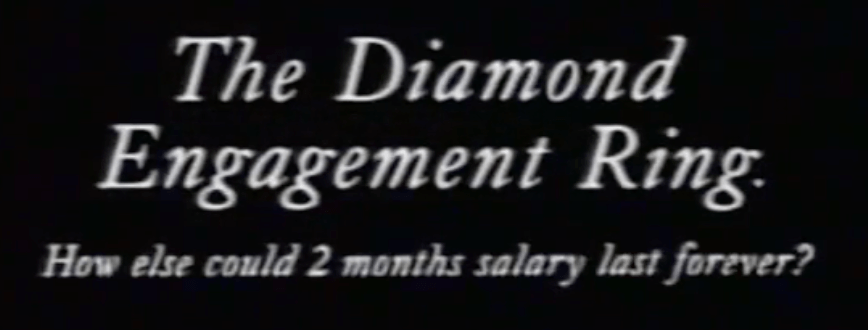
In 1947, Frances Gerety was working on De Beers’ account and came up with the tagline “A Diamond is Forever”. It was used in every advert from that year until the present day. Naturally they got a boost from Ian Fleming’s book and Shirley Bassey’s song of the same name. It was De Beers that gave Ian Fleming the idea and not the other way around.
This advert from 1991 sums it all up, it is the absolute peak of De Beers. They controlled 90% of the rough diamond market at that point. The advert is brilliant, no words just themes everyone understands. Unashamedly, it says “How else could 2 months salary last forever?”. Quite simply delighting in the expense and scarcity of it all.
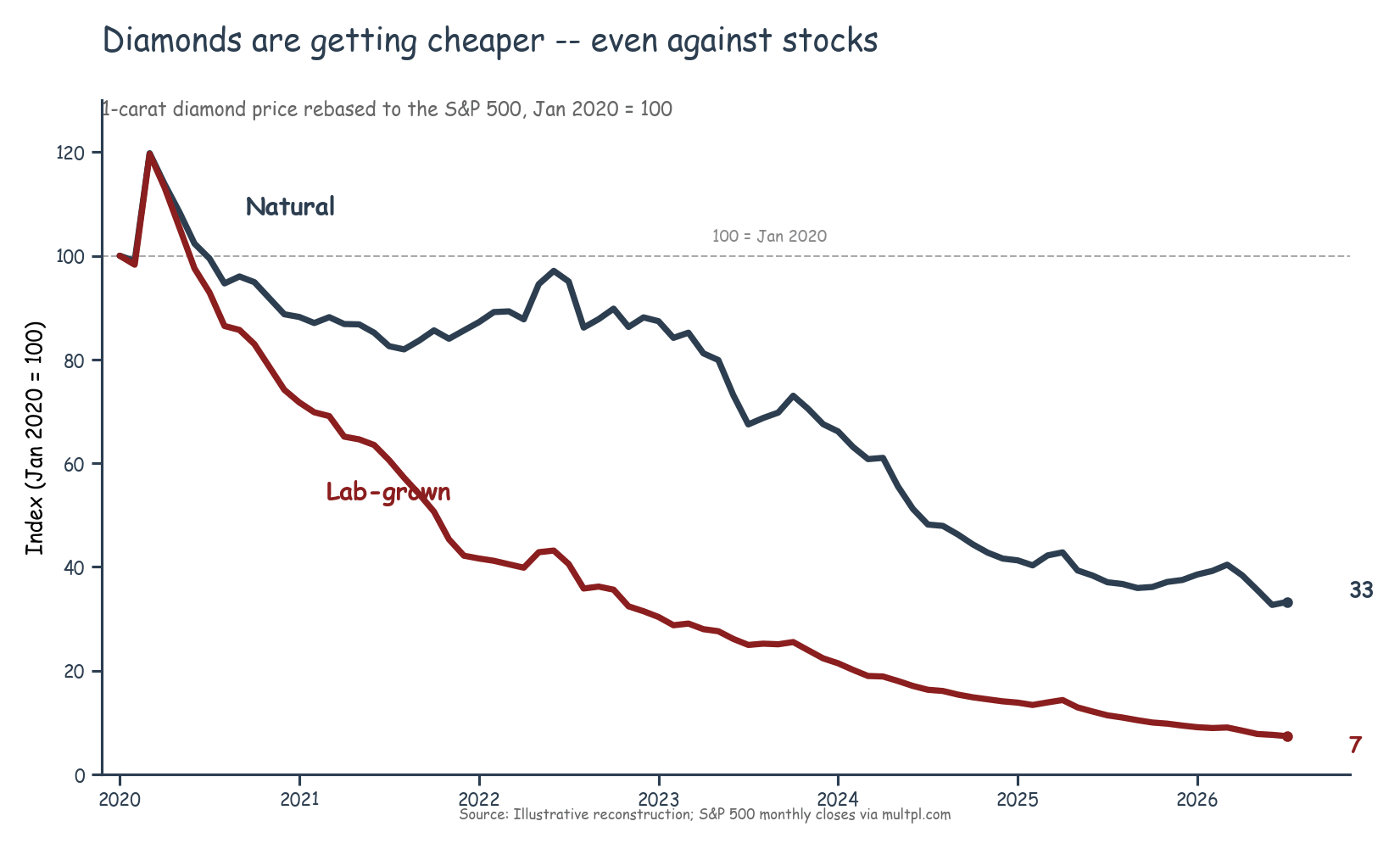
Mapping the price of natural diamonds against stocks shows the true extent of the decline in the last six years. It is lab grown diamonds doing the damage. They are identical structurally to diamonds, they are diamonds in all chemical and physical senses and they are far less dangerous to produce.
The marginal cost of a lab grown diamond is going to keep falling, so natural diamonds will keep falling.
De Beers has been absolutely brilliant at branding and marketing, but physical world scarcity is going to get a lot harder.
Sustaining scarcity is really hard. Most brands ultimately destroy themselves through greed by chasing growth through expansion so that Armani becomes ArmaniX becomes a thing nobody wants. Louis Vuitton did the same. Very few brands can resist the temptation, but De Beers did right up until someone worked out how to grow diamonds.
Not three years ago it was hard to get a web developer or a Linux engineer. Today you don’t need to worry about that because those things are basically free now. All intellect based roles will be free in two years, although plenty of us will pretend that isn’t true.
Scarcity. De Beers understood it.
Euro-Trash

This is exactly the scenario we are starting to see in Australia too. The energy double-speak.
It is absolutely true that Europe is less exposed to fossil fuels than before, they got rid of their fossil fuel power stations. Prices are less volatile, but they are also four times higher than they were.
If I get run over and killed on the way home, it is absolutely true that at no point that day would I have been safer from a shark attack.
